

TacticalGear4Life is supported by you, its above average Studly and Masculine audience. When you make a purchase through our links below which may be affiliate links, we may earn an affiliate commission, this in no way affects you or the cost of your gear.
Tactical clothing is often misunderstood as gear reserved only for military or law enforcement, but in reality, it’s much broader and far more practical than that.
Designed around durability, functionality, and performance, tactical apparel is built to handle demanding environments while keeping the wearer comfortable and mobile.
From reinforced fabrics and smart pocket placement to weather resistance and load-bearing capability, every feature serves a purpose.
Today, tactical clothing is used by professionals, outdoor enthusiasts, and everyday civilians who value reliability over fashion trends.
In this article, we’ll break down what tactical clothing really is, what sets it apart from regular apparel, and why it’s become so popular across so many different missions and lifestyles.
TABLE OF CONTENTS
CHECK OUT MORE GREAT GEAR
Salomon XA Forces Jungle Boots: Ultimate Review
The Most Essential Tactical Gear: Get Prepared Now

UNDERSTANDING THE TERM “TACTICAL”
WHAT ARE TACTICS?
Tactics are specific, short-term strategies or maneuvers used to achieve a particular goal, often in military operations.
They involve detailed planning and execution, adapting to immediate circumstances to outmaneuver opponents or overcome challenges effectively.
WHAT IS THE TACTICAL LEVEL IN MILITARY OPERATIONS?
The tactical level of military operations focuses on the direct execution of combat by frontline troops such as infantry and armoured soldiers who engage the enemy in immediate, intense battles.
Tactical proficiency is critical; without effective tactical execution by these war fighters, even the best strategic or operational plans can fail, as they are the ones who confront the enemy head-on.

DEFINING TACTICAL CLOTHING
Understanding tactics and the tactical level helps us better understand what tactical clothing is.
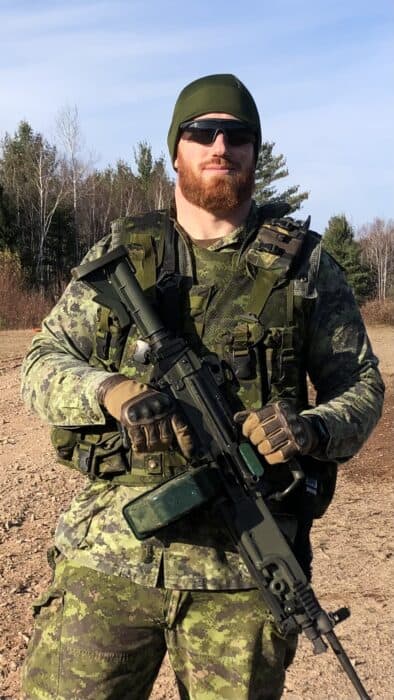
Tactical clothing is specifically designed for military personnel, especially frontline combat troops, to enhance their proficiency and give them a battlefield advantage over the enemy.
Making them more efficient and deadly.

ORIGINS OF TACTICAL CLOTHING
WHERE DO WE FIRST SEE THE TERM TACTICAL CLOTHING BEING USED?
We first see the term “Tactical Gear” or “Tactical Clothing” appearing around the 1970s and 1980s.
Every day, manufacturers were trying to rebrand surplus and specialized military equipment to appeal to civilians, hunters, and outdoor enthusiasts without directly calling it “military gear”.
The legendary LA SWAT, which many movies have been based on, as well as the original special forces, the SAS, popularized the use of black nylon gear.
This popularity, created by the rebrand and these specialized units, was the main driver of demand not for “military gear” but for this new, specialized “Tactical Clothing”.
As a side note, even though the popularization and demand began in the 1970s and 1980s, one of the original tactical gear companies, 5.11, is highly credited with the commercialization of tactical gear and tactical clothing.
In 1992, 5.11 developed a cargo-style pant that was adopted by the FBI, helping to greatly solidify this new “tactical gear” brand.
WHEN DO WE FIRST SEE THE TERM TACTICAL PANTS?
Modern-day tactical pants, like all tactical gear, didn’t appear overnight; they evolved over decades.
Through a combination of the British military in the 1930s, everyday cargo pants, Project Objective Force Warrior in the late 1990s and early 2000’s, and eventually the company 5.11 bridging the gap between military and civilian gear.
The term “tactical pants” stems directly from 5.11, bridging the military and civilian gap, when the FBI adopted 5.11’s climbing pants and asked them to make a version specifically for the FBI and its agents.
Because they were no longer being used for “climbing” but for “tactical” training and field operations, the label “tactical pants” was born to better describe their new professional purpose.
5.11 took the cargo-pant legacy, and OFW-style system thinking and refined it with reinforced stress points, purpose-driven pocket layouts, and fabrics designed for mobility and longevity.

WHEN DO WE FIRST SEE THE TERM TACTICAL COMBAT SHIRT?
Just like the term “tactical pants,” the term “tactical combat shirt” evolved from military needs before the big rebrand in the 1970s and 1980s, moving into the commercial market.
In the early 2000’s, Crye Precision, now one of the world’s leading tactical gear companies, took the idea from some DIY projects done by special forces operators.
Originally, SF operators wore standard button-up military tunics, but these caused overheating and chafing under their plates.
The operators started wearing standard shirts and removing the pockets from their tunics, sewing them onto the sleeves to maintain utility and functionality while remaining cool.
In 2007, the US Army officially adopted the ACS (Army Combat Shirt). These shirts became the official look of the modern elite operator, and those soldiers in theatres such as Afghanistan.
Around this time, manufacturers began selling them to civilians and law enforcement as “tactical combat shirts,” emphasizing their athletic fit, utility, and functionality.

WHEN DO WE FIRST SEE THE TERM TACTICAL BOOTS?
The term “Tactical Boot” is fairly modern, as, through most of military history, this style of boot was known as a combat boot.
By World War II, combat boots were being redesigned for specialized roles.
Paratroopers received jump boots with higher lacing and stronger ankle support to handle parachute landings, while jungle boots and cold-weather boots appeared for different environments.
In the late 1970s–1980s, law enforcement and special operations units began adopting footwear designed specifically for fast, mission-oriented work rather than traditional heavy combat boots.
In the 1980s, the FBI began seeking footwear lighter, faster, and more comfortable than traditional military combat boots for agents and tactical teams.
British company Magnum Boots responded by designing one of the first boots specifically marketed for law enforcement and tactical professionals.
Magnum combined military-style durability with the comfort of athletic shoes, which was a major shift at the time.
The design became extremely popular among police and security forces and helped popularize the term “tactical boot” in the gear market.
From there, other companies like Bates, Danner, and later 5.11 Tactical helped expand this category into what we have today.

THE EVOLUTION OF TACTICAL CLOTHING
TACTICAL CLOTHING OF THE PAST
The idea of tactical clothing and gear designed specifically to support a person in combat or demanding environments dates back centuries.
Even medieval knights relied on specialized equipment such as chain mail, gambesons, and plate armour to balance protection with mobility on the battlefield.
As warfare evolved, so did the clothing and equipment worn by soldiers, eventually leading to standardized military uniforms and specialized gear designed for specific roles.
By the 19th and early 20th centuries, militaries began incorporating more practical features such as reinforced fabrics, durable leather boots, and load-bearing equipment.
These allowed soldiers to carry ammunition and supplies more efficiently.
Innovations like cargo pockets, first introduced by the British military for airborne troops in the 1930s, showed how small design changes could significantly improve a soldier’s effectiveness.
While these early forms of tactical clothing were rugged and functional, they were often heavy, restrictive, and built primarily for durability rather than comfort or mobility.
Over time, battlefield experience and technological advancements gradually pushed military designers to rethink how clothing could better support movement, endurance, and operational efficiency.

TACTICAL CLOTHING OF TODAY
Today’s tactical clothing represents the result of decades of refinement, innovation, and real-world feedback from soldiers, law enforcement, and tactical professionals.
Modern tactical apparel is built with advanced materials such as ripstop fabrics, stretch panels, moisture-wicking synthetics, and lightweight yet extremely durable textiles.
These improvements allow clothing to withstand harsh environments while remaining comfortable enough for long hours of wear.
Designers also place a strong emphasis on ergonomics, with articulated knees, gusseted crotches, and strategically placed pockets that allow users to access essential gear without sacrificing mobility.
Many modern garments are also designed to integrate seamlessly with plate carriers, load-bearing systems, and communication equipment.
Reflecting the modern philosophy that gear should work together as a complete system rather than as individual pieces.
As a result, tactical clothing has expanded beyond the battlefield and into a wide range of uses, from law enforcement and security work to outdoor adventure and everyday wear.
What began centuries ago as simple protective garments for warriors has evolved into highly engineered apparel designed to perform in some of the most demanding conditions imaginable.

WHAT IS THE FUTURE OF TACTICAL CLOTHING?
The future of tactical clothing is moving toward integrated systems that combine protection, technology, and human performance into a single garment.
Military research programs such as the U.S. Army’s Soldier 2025 are exploring advanced materials like smart fabrics, nanotechnology, and liquid armour.
Systems meant to remain flexible during normal movement but harden upon impact, increasing protection without sacrificing mobility.
Experimental systems like the Tactical Assault Light Operator Suit have also tested integrating sensors, advanced armour layers, and even exoskeleton support into wearable platforms designed to enhance strength, endurance, and survivability.
At the same time, battlefield clothing is becoming increasingly connected.
Programs such as the Integrated Visual Augmentation System aim to link wearable gear with augmented-reality displays, thermal imaging, and real-time battlefield data.
Giving soldiers greater situational awareness directly through their equipment.
Similar efforts can be seen in Canada’s Integrated Soldier System Project, which treats a soldier’s clothing and gear as one integrated system designed to improve communication, targeting, and operational effectiveness.
As these technologies continue to develop, tactical clothing will likely evolve beyond simple uniforms.
Into intelligent, sensor-equipped systems that enhance protection, awareness, and physical capability while remaining lightweight and adaptable to changing environments.

WHAT IS THE MOST COMMON TACTICAL CLOTHING USED BY OPERATORS?
Many of today’s special forces worldwide train and operate together, learning from each other and making much of the clothing they use fairly common across the board.
But what is the most common clothing that these elite soldiers wear?
| MOST COMMON TACTICAL CLOTHING |
|---|
| Tactical Shirt |
| Tactical Pants |
| Tactical Jackets |
| Tactical Boots |
| Tactical Gloves |
| Base Layers |
TACTICAL PANTS
Tactical pants are designed for durability, mobility, and storage.
They typically use reinforced fabrics like ripstop and include multiple low-profile pockets, articulated knees, and stretch panels so operators can move freely while carrying essential small items.
TACTICAL/COMBAT SHIRTS
Combat shirts are worn under body armour and are built to balance comfort and protection.
The torso section is usually made from breathable, moisture-wicking fabric, while the sleeves use tougher materials with pockets and reinforced elbows.
TACTICAL JACKETS
Tactical jackets provide weather protection without limiting movement. Many are made with windproof or waterproof materials and feature ventilation, multiple utility pockets, and adjustable cuffs or hoods for changing environments.
TACTICAL BOOTS
Tactical boots are built for long movements across rough terrain. They emphasize ankle support, traction, and lightweight construction while remaining durable enough for climbing, running, and extended patrols.
TACTICAL GLOVES
Tactical gloves protect the hands without sacrificing dexterity. They allow operators to handle weapons, climb, or manipulate equipment while providing protection against abrasion and impact.
BASE LAYERS
Base layers regulate body temperature and manage moisture. Operators rely on them to stay warm in cold environments or cool in hot climates while preventing chafing during long missions.

WHAT TACTICAL CLOTHING SHOULD YOU USE?
TACTICAL CLOTHING FOR BEGINNERS
With all the clothing options that fit into tactical clothing, it can be overwhelming for someone just getting into it, and knowing where to start can be hard.
My number one recommendation for where everyone should start when first buying tactical clothing is: Tactical Boots and Tactical Pants.
Boots are arguably the most important piece of tactical clothing because everything starts with your feet.
Quality tactical boots provide ankle support, traction, and durability across rough terrain, helping prevent fatigue and injury during long periods of movement.
Tactical pants are another foundational item thanks to their durability, practical design, and comfort.
For newcomers, a good pair of tactical pants offers the perfect balance of these attributes, as well as toughness and functionality for both training and everyday outdoor use.

TACTICAL CLOTHING FOR THE ALREADY INITIATED
For a more experienced or seasoned individual, the focus should shift from basic durability to specialization, layering, and mission adaptability.
The next step is to build a complete tactical clothing system that functions across different conditions and missions.
Now’s the time to add in the Tactical or Combat Shirt, Tactical Gloves, and Base Layer.
A Combat Shirt is a staple piece of clothing for experienced operators, particularly when wearing body armour or a plate carrier.
The design keeps the wearer cool, made from lightweight, moisture-wicking fabric to prevent overheating under armour. They also keep you comfortable and mobile during long periods of activity.
Tactical Gloves are another essential piece of clothing that experienced individuals can’t overlook. They protect the hands from cuts, abrasions, and impact while still allowing enough dexterity to manipulate equipment and tools.
For anyone working with firearms, tools, or rough terrain, gloves can make a significant difference in both safety and control.
A quality Base Layer is also vital to a complete clothing system for regulating body temperature during long operations or outdoor activities.
These lightweight garments are designed to wick sweat away from the body while providing insulation when needed.
In cold environments, thermal base layers help retain heat without adding bulk. A good layering system allows users to adapt quickly to changing weather and activity levels.

CONCLUSION
Tactical clothing has come a long way from the early battlefield garments worn by warriors centuries ago.
What began as simple protective clothing designed for durability has evolved into highly specialized purpose-built apparel created for mobility, comfort, and performance in demanding environments.
From the introduction of cargo pockets and reinforced fabrics to the modern innovations seen in today’s combat shirts, tactical pants, and performance boots, each development has been driven by real-world needs and experience.
As technology continues to advance, the future of tactical clothing will likely bring even smarter fabrics, improved protection, and better integration with modern equipment systems.
Whether used by military professionals, law enforcement, outdoor enthusiasts, or everyday individuals who value durability and functionality, tactical clothing represents a practical blend of innovation, reliability, and purpose-driven design.